Most people think of Kerala as a place to slow down — backwaters, beaches, hill stations, that kind of thing. And it is. But there’s another side to the state that doesn’t get talked about nearly as much: trekking through the Western Ghats, camping out in the hills, kayaking through the backwaters instead of just floating past them on a houseboat, spotting wildlife in the forests. If you’re the type who wants a bit of adrenaline mixed in with the scenery, Kerala has more to offer than it usually gets credit for.
Part of this comes down to geography. The Western Ghats bring mountains, forests and waterfalls right through the middle of the state, while the Arabian Sea takes care of the water sports side of things along the coast. Add in the rivers, lakes, backwaters and wildlife sanctuaries, and you end up with a surprising amount of variety for one state.
Whether you’ve done this kind of thing before or you’re trying it for the first time, there’s usually something here that fits.
What Is Adventure Tourism?
At its core, adventure tourism just means travelling somewhere to do things that get your heart rate up a little — trekking, camping, rafting, kayaking, cycling, wildlife encounters, all of it. It’s less about ticking off famous landmarks and more about actually doing something.
Kerala works well for this because you’re rarely limited to one type of landscape. Mountains, forests, rivers, beaches, backwaters — they’re all within reach, and a lot of trips end up combining a few of them with the usual sightseeing.
1. Trekking in the Western Ghats
If there’s one activity that comes up again and again when people talk about adventure in Kerala, it’s trekking. The Western Ghats cut through the state and bring with them a huge stretch of mountains, forests and trails.
Munnar, Wayanad, Idukki and Pathanamthitta are the go-to areas, with everything from easy nature walks to proper mountain hikes on offer.
The standout is probably Chembra Peak in Wayanad — it’s the one with the heart-shaped lake near the top, and the views along the way are hard to beat. Munnar has its own share of mountain trails, while Idukki leans more toward forested hills and old plantations.
One practical note: check ahead of time whether you’ll need a permit or a local guide, and get an update on trail conditions before you set out — things can change quickly depending on the weather.
Best for: Hikers, nature lovers, photographers and adventure enthusiasts.
2. Camping in Kerala’s Hills
There’s something about waking up to mist rolling over the hills and birds instead of traffic that camping delivers in a way regular sightseeing just can’t.
Munnar, Vagamon, Wayanad and Idukki are where most people head for this, and depending on where you go, you can pick between organised campsites, tents, or more comfortable nature stays.
Vagamon in particular gets a lot of love for camping — the rolling green hills and quiet make it feel like a different world. Wayanad mixes forests, mountains and plantations, and Munnar brings the kind of highland views you’d expect from postcards.
A quick word of caution: a lot of these areas are ecologically sensitive, so stick to designated sites, pack out your rubbish, and follow whatever local rules are in place.
Best for: Families, couples, groups and nature lovers.
3. White-Water Rafting
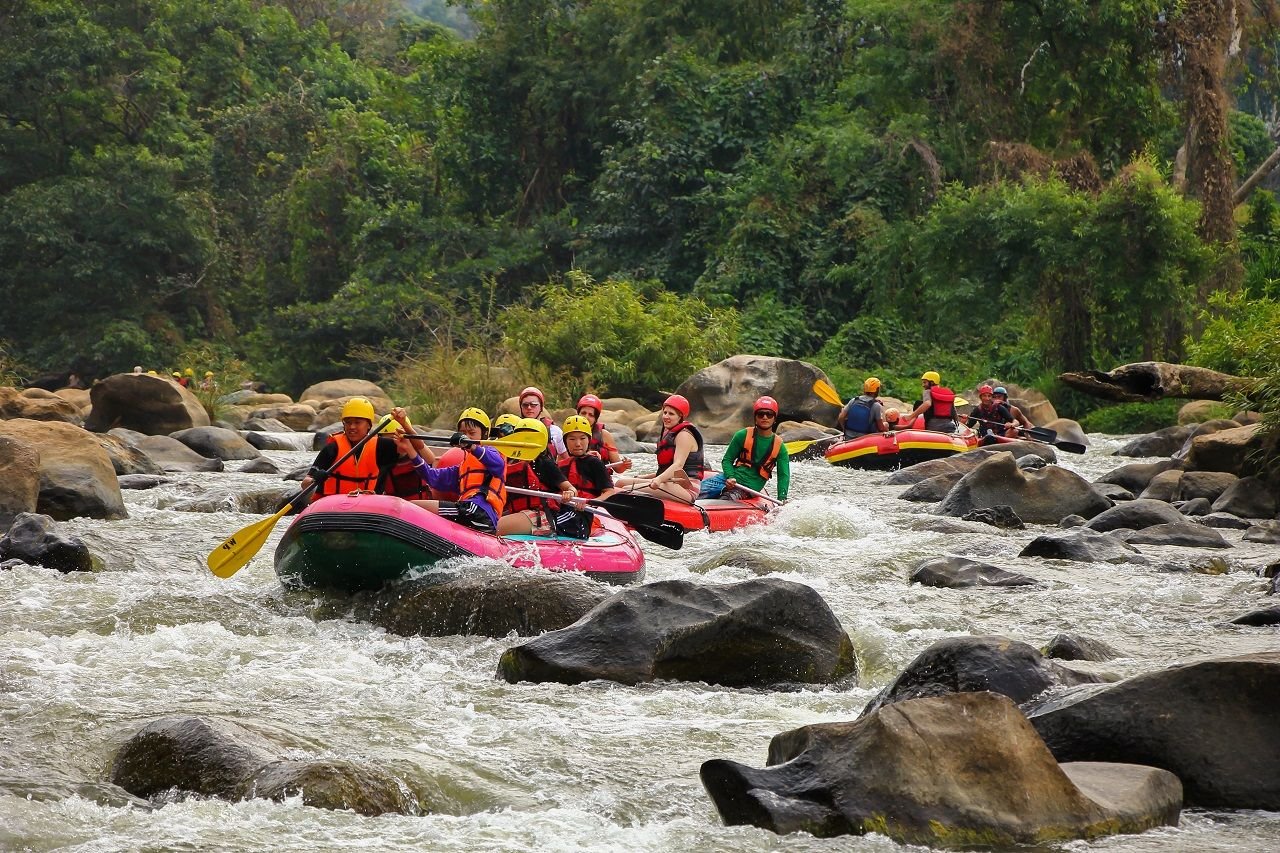
For something with a bit more adrenaline, white-water rafting is worth looking into.
The Periyar River, along with a few other waterways, offers rafting depending on which operators are running trips and what the water’s doing that season.
You’ll be in an inflatable raft with a trained guide, safety gear on, getting briefed before you even touch the water. Just keep in mind that conditions swing a lot with rainfall — what’s runnable one month might not be the next, so it’s worth checking before you plan around it.
Best for: Adventure seekers, groups and thrill lovers.
4. Kayaking Through Kerala’s Backwaters
Everyone pictures the backwaters as houseboat territory, but kayaking flips that completely — instead of drifting past everything, you’re actually paddling through it.
You get into the narrow canals, lagoons and village waterways that houseboats can’t really reach, moving at your own pace. Alappuzha, Kumarakom and Ashtamudi are the areas most people head to for this.
Honestly, the best part is just watching everyday life go by from the water — coconut groves, small footbridges, houses right on the bank, fishermen out doing their thing. It’s a good option even if you’ve never kayaked before, as long as you’ve got a guide who knows the area and the weather’s cooperating.
Best for: Beginners, photographers, couples and nature enthusiasts.
5. Paragliding in Vagamon
If you want to see Kerala from a completely different angle, Vagamon is where people go to paraglide. The open hills and elevation make it a natural fit.
Most flights are tandem, so you’re paired with a trained pilot and don’t need any experience going in. Once you’re up, you get Vagamon’s green hills and valleys laid out below you — though obviously the weather has the final say on whether flights happen.
It’s the kind of thing that’s genuinely hard to replicate anywhere else in Kerala.
Best for: First-time flyers, adventure seekers and aerial photography enthusiasts.
6. Wildlife Safari
Not every adventure needs to be physically demanding. Watching wildlife in its own habitat counts too, and Kerala does this well.
Periyar Tiger Reserve, Wayanad Wildlife Sanctuary and Silent Valley National Park are the big names here, each offering a regulated way to get into the forest and, with a bit of luck, spot something memorable.
Periyar, near Thekkady, is especially known for its forest-and-lake setup — there’s boating available along with guided walks. Over in Wayanad, the Muthanga and Tholpetty ranges are the main draws.
Worth remembering: sightings are never a sure thing, and you should always keep your distance and listen to the forest staff and guides.
Best for: Wildlife lovers, photographers and nature enthusiasts.
7. Rock Climbing and Rappelling
Kerala’s rocky terrain opens the door to rock climbing and rappelling — activities that ask a bit more of you technically, not just physically.
You’ll find organised sessions around Munnar, Wayanad and other hill regions, run by adventure operators who handle the equipment and instruction. If you’re new to it, stick with a properly managed operator rather than going it alone.
The payoff, beyond the challenge itself, is usually a view that makes the whole thing worth it.
Best for: Adventure enthusiasts, groups and fitness lovers.
8. Mountain Biking and Cycling
Between the hills, plantations and quiet rural roads, Kerala turns out to be a pretty good place to cycle.
Munnar and Wayanad are the standouts for mountain biking, with routes running through tea estates, forest tracks, small villages and winding hill roads.
What cycling gives you that most other transport doesn’t is time — time to actually notice the landscape and the people living in it, rather than just passing through on the way to the next stop. If you’re planning a longer ride, though, be ready for steep climbs and weather that can turn on you.
Best for: Fitness enthusiasts, cyclists and slow travellers.
9. Ziplining and Rope Activities
Not everyone wants to commit a full day to trekking, and that’s where ziplining and rope activities come in — a quick adventure fix at Kerala’s hill destinations.
You glide along a cable strung across a valley or forest, and a lot of the parks running these also have rope courses and climbing walls if you want to keep going.
As always, go with a reputable operator and actually wear the safety gear — it sounds obvious, but it matters.
Best for: Families, young travellers and beginners.
10. Scuba Diving and Water Adventures
The coast adds a whole other layer to Kerala’s adventure scene. The Arabian Sea opens things up for water-based activities, though what’s available depends a lot on where you are, the season, and the weather that day.
Kovalam and other coastal spots are where you’ll find surfing, kayaking and other organised marine activities. Scuba diving is a bit more involved — most people start with an introductory or guided dive rather than jumping straight into anything advanced.
It’s a completely different kind of adventure from what you’d get in the mountains of Wayanad or Munnar, but it rounds things out nicely.
Best for: Water-sport enthusiasts, beginners and beach lovers.
Best Places for Adventure Tourism in Kerala
Each of Kerala’s adventure hotspots has its own personality — here’s a quick rundown.
Munnar
Tea plantations and mountains define this one. Good for trekking, camping, cycling and general outdoor time.
Wayanad
Forests, mountains, waterfalls, wildlife — Wayanad covers a lot of ground, which makes it strong for trekking, camping and nature walks.
Vagamon
The paragliding capital, but also solid for camping and other hill-based activities.
Thekkady
Built around the Periyar landscape, this is the wildlife and nature-adventure hub.
Alappuzha and Kumarakom
Your best bet for kayaking, canoeing and other water-based adventures in the backwaters.
Kovalam
The gateway to Kerala’s coastal activities and water sports.
Best Time for Adventure Tourism in Kerala
It really comes down to what you want to do.
October to February is generally the sweet spot — comfortable weather that works well for trekking, camping, cycling and sightseeing alike.
June to September is monsoon season, and while Kerala turns unbelievably green during these months, heavy rain can shut down or complicate trekking trails, river activities and other outdoor plans.
March to May runs warmer, especially at lower elevations, but the hill areas still hold up reasonably well for outdoor activities.
Whatever you’re planning, it’s worth checking current weather and availability before you commit — especially for trekking, rafting, paragliding and anything on the water.
Safety Tips for Adventure Tourism in Kerala
A few things worth keeping in mind, whatever activity you choose:
- Go with licensed or properly managed operators where that applies.
- Listen to your guides and instructors — they know the terrain.
- Actually wear the safety gear you’re given.
- Check the weather and local conditions before heading out.
- Stay out of restricted forest or wildlife zones.
- Carry enough water, especially on treks.
- Wear proper footwear and clothing for the activity.
- Skip risky activities if the weather turns bad.
- Keep your distance from wildlife.
- Don’t leave plastic or waste behind.
- Follow whatever local environmental rules are in place.
Why Choose Kerala for Adventure Tourism?
What makes Kerala stand out is how much you can pack into one trip. Trek through the Western Ghats one day, kayak the backwaters the next, spend the day after that in a wildlife sanctuary — it’s rare to find that kind of range in a single state. That’s part of why it works for such a broad mix of travellers, from people trying their first outdoor activity to seasoned adventurers looking for somewhere new.
It’s also a good way to see Kerala beyond the usual postcard shots. Instead of just looking at the landscape from a distance, you’re actually moving through it — trekking, paddling, cycling, climbing, or just quietly watching wildlife go about its day.
Conclusion
Adventure tourism in Kerala brings together nature, exploration and genuine excitement in a way that’s hard to find elsewhere. Trekking in Wayanad and Munnar, paragliding over Vagamon, kayaking through the backwaters, tracking wildlife in Thekkady — there’s no shortage of ways to get your adventure fix here.
The best trip isn’t necessarily the most extreme one. It’s the one that actually fits who you are, what you’re comfortable with, and how much experience you’re bringing — all while respecting the environment you’re moving through.
If you’re looking to add a bit of excitement to a Kerala holiday, adventure tourism is a genuinely different way to experience the state’s mountains, forests, rivers, backwaters and coastline — not from the outside, but from right in the middle of it.